
Nimiq Adoption Network Proposal

Nimiq Adoption Network (Nigeria Pilot)

QR-Based Campus & Merchant Adoption Program

1. Executive Summary

The Nimiq Adoption Network (Nigeria Pilot) is a real-world adoption initiative designed to drive actual usage of Nimiq (NIM) in Nigeria through QR-based payments, merchant onboarding, and campus activation programs.

Unlike awareness campaigns, this initiative focuses on live transactions, merchant integration, and measurable economic activity within the Nimiq ecosystem.

2. Problem Statement

Despite ecosystem growth, Nimiq adoption faces key challenges:

  • Low real-world usage of NIM
  • Limited merchant acceptance infrastructure
  • Weak conversion from awareness to actual transactions
  • No structured incentive system for early adopters
  • Fragmented, non-measurable adoption efforts

This creates a gap between interest in Nimiq and real-world usage.

3. Project Objectives

The goal is to establish a functioning QR-based payment adoption loop in Nigeria.

Key Objectives:

  • Enable merchants to accept NIM via QR payments
  • Onboard students as active wallet users
  • Generate real, verifiable NIM transactions
  • Incentivize early adoption on both merchant and user sides
  • Produce measurable adoption data for ecosystem evaluation

4. Target Groups

  • University students in Nigeria
  • Local merchants (shops, cafes, vendors)
  • New crypto users
  • Active Nimiq community participants

5. Implementation Plan

Phase 1: Setup (Weeks 1–2)

  • Build onboarding and tracking system
  • Recruit local ambassadors
  • Identify target campuses and merchants
  • Deploy QR payment infrastructure

Phase 2: Pilot Launch (Weeks 3–6)

  • Begin campus onboarding
  • Activate first merchants
  • Initiate first incentivized transactions

Phase 3: Expansion (Weeks 7–10)

  • Scale merchant network
  • Increase student participation
  • Track and validate transaction flow
  • Optimize onboarding process

Phase 4: Evaluation (Weeks 11–12)

  • Measure adoption metrics
  • Compile ecosystem impact report
  • Deliver final results to council

6. Incentive Model

Incentives are strictly tied to verified real-world usage:

  • Merchant rewards for accepting NIM payments
  • User rewards for completing transactions
  • Controlled distribution based on verified activity
  • No rewards for engagement, content, or referrals alone

7. Budget Request

Total Requested: $3,000 – $8,000 (equivalent in NIM)

Allocation:

  • Merchant incentives — 40%
  • User incentives — 25%
  • Field operations & onboarding — 20%
  • Coordination & management — 10%
  • QR materials & documentation — 5%

8. Milestones & Deliverables

Milestone 1: System Deployment

  • QR payment setup completed
  • Tracking system active
  • First onboarding wave initiated

Milestone 2: Live Transactions

  • First merchants active
  • First student transactions recorded

Milestone 3: Network Expansion

  • Increased merchant coverage
  • Continuous transaction flow

Milestone 4: Final Report

  • Full adoption metrics
  • Merchant/user activity analysis
  • Ecosystem impact report

9. Success Criteria

The project will be considered successful when:

  • Merchants actively accept NIM payments via QR
  • Students consistently use wallets for real transactions
  • Transactions are verifiable and documented
  • Incentive distribution is transparent and traceable
  • A measurable adoption dataset is produced

10. Compliance & Transparency

This initiative adheres to the Nimiq Community Council standards by ensuring:

  • Transparent fund usage
  • Incentives tied strictly to verified transactions
  • No spam, artificial engagement, or content farming
  • Full reporting and traceability of activities
  • Ethical and measurable ecosystem growth

11. Closing Statement

The Nimiq Adoption Network (Nigeria Pilot) bridges the gap between awareness and real-world usage by building a structured QR payment ecosystem in Nigeria.

It focuses on one core outcome:
turning NIM into a usable currency in everyday transactions.
Draft Message for Nimiq Forum
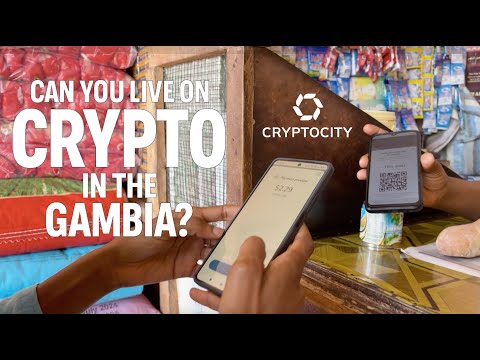
Subject: Strengthening Nimiq Adoption: Cryptocity Africa’s Regional Strategy
Hi everyone,
I’ve been following the recent discussions around regional adoption pilots and would like to share some context regarding our work at Cryptocity Africa.
Our team has been building out the legal, operational, and technical infrastructure for Nimiq-related business throughout the region. With our registration under the Companies Act and our ongoing integrations with mobile money rails, we have established a solid foundation designed specifically to act as the primary gateway for Nimiq adoption.
We believe that for adoption initiatives to be sustainable and compliant, they must be built on top of robust, local infrastructure. Our goal is to ensure that all regional projects are not only effective but also aligned with the long-term regulatory and technical standards of our ecosystem.
I welcome collaboration with community members who are passionate about driving real-world usage. If you are developing a project in this region, I invite you to reach out to me directly. Let’s coordinate our efforts to ensure your initiatives are integrated with the existing infrastructure at Cryptocity Africa, allowing us to build a more unified and impactful network together.
We are committed to transparent, verifiable, and ethical growth. I look forward to working with anyone who shares this vision for Nimiq.
Best regards,
Abdourahim R. Jallow
Founder & CEO, Cryptocity Africa

1 Like
1 Like

Thank you for taking the time to put together this proposal and for focusing on real-world adoption. We appreciate the intention behind building merchant and campus usage around NIM and the emphasis on measurable activity rather than purely promotional campaigns.

However, after reviewing the proposal, we do not believe it is ready for funding in its current form.

While the goal of increasing real-world usage is understandable, the proposal does not clearly demonstrate what is being built that is not already available through existing Nimiq infrastructure. Nimiq already provides solutions such as Cryptopayment.link and Nimiq Pay, both of which support QR-based payments. As a result, we struggle to understand what additional infrastructure or innovation this proposal would introduce, especially considering the requested budget.

More broadly, the proposal remains very high-level and lacks the operational details necessary to properly evaluate it. Key questions remain unanswered. Some of them are :

How many merchants and users are expected to be onboarded?
Which campuses or regions are targeted?
How will success be measured?
How would incentives work ?
How will incentive abuse and self-generated transactions be prevented?
What is the long-term sustainability once incentives end?
…

The milestones and deliverables are mostly activity-based rather than outcome-based, making it difficult to assess the expected impact or cost-effectiveness of the initiative.

In addition, we do not see enough uniqueness in the proposal relative to the amount of funding requested. Merchant onboarding and local payment adoption are already areas that have been explored by the ecosystem through initiatives such as the CryptoCity effort and collaborations focused on merchant acceptance and crypto maps.

For that reason, this type of grassroots merchant adoption program appears to fit more naturally within existing adoption initiatives rather than as a standalone proposal requesting separate funding. We would encourage the author to engage with those efforts and explore possible collaboration instead of duplicating work already underway.

For these reasons, we cannot support the proposal in its current form.

That said, we appreciate the effort and encourage the author to continue exploring ways to contribute to the ecosystem. A revised proposal with clearly defined KPIs, stronger differentiation from existing tools and initiatives (or direct use of them), a detailed execution plan, and a more compelling value proposition could lead to a more favorable evaluation in the future.

Thank you for the detailed review and constructive feedback.

I understand the concerns regarding differentiation from existing Nimiq infrastructure and initiatives. However, I would like to clarify that the intention was never to duplicate tools such as Nimiq Pay or Cryptopayment.link. Rather, the goal was to drive real-world adoption by leveraging these existing tools through practical onboarding, merchant activation, and educational demonstrations focused on everyday usage.

I would also like to note that while CryptoCity is an excellent initiative and has made valuable contributions to merchant adoption, it is based in The Gambia, whereas this proposal focuses specifically on Nigeria—one of the world’s largest crypto markets, with its own unique audience, culture, payment habits, and adoption opportunities. The intention was not to replicate CryptoCity’s work, but to create a localized adoption framework that introduces Nimiq to a different market through hands-on demonstrations and real transaction activity.

That said, I acknowledge that the proposal did not clearly communicate this distinction and lacked sufficient detail regarding KPIs, onboarding targets, success metrics, incentive structures, abuse prevention mechanisms, sustainability, and execution plans. These are valid concerns, and I appreciate them being highlighted.

Thank you again for the honest feedback and thoughtful evaluation. I will take these points into consideration and work on a revised proposal with clearer objectives, measurable outcomes, a more detailed implementation strategy, and a stronger explanation of how a Nigeria-focused initiative can complement—rather than duplicate—existing ecosystem efforts.

I appreciate the opportunity to present the idea and remain excited about contributing to the growth and adoption of Nimiq in the future.

Hi @Mayowa

Just a quick answer on one point :

This kind of sentence made us think you would create a QR based solution, and as NimiqPay and CPL already provide that functionnality, we didn’t understand the need to build something new to achieve the same thing.